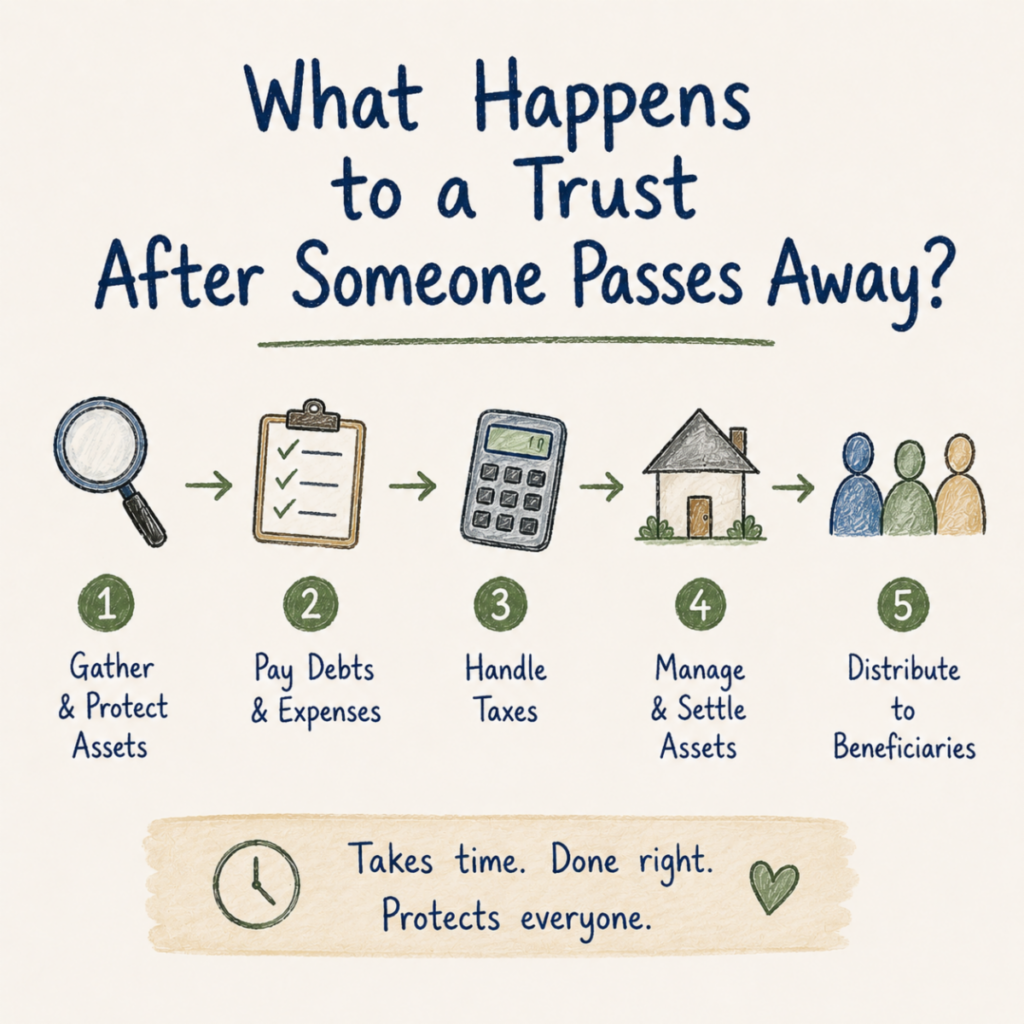
What Happens to a Trust After Someone Passes Away?
Many people assume that once someone passes away, the assets are immediately distributed to the beneficiaries. In reality, trust administration is a detailed process that often takes several months—or longer—depending on the complexity of the estate.
Before any distributions can be made, the trustee has a number of important legal responsibilities. These may include locating and safeguarding assets, obtaining date-of-death values, notifying beneficiaries, paying outstanding debts and expenses, filing tax returns, and determining whether property needs to be sold or transferred.
In many cases, assets such as real estate, vehicles, business interests, or investment accounts require additional documentation before ownership can change. Trustees must also ensure that creditor claims and tax obligations have been addressed before making final distributions.
While beneficiaries are understandably eager to receive their inheritance, trustees have a legal duty to administer the trust carefully and in accordance with both the trust document and applicable law. Taking the time to do things properly helps protect everyone involved and reduces the risk of costly mistakes.
Every trust is unique, which is why the timeline can vary significantly from one estate to another. Open communication throughout the process helps beneficiaries understand what has been completed, what remains to be done, and what to expect next.